

This post contains affiliate links, which means I make a small commission at no extra cost to you. See my full disclosure here.
Introduction
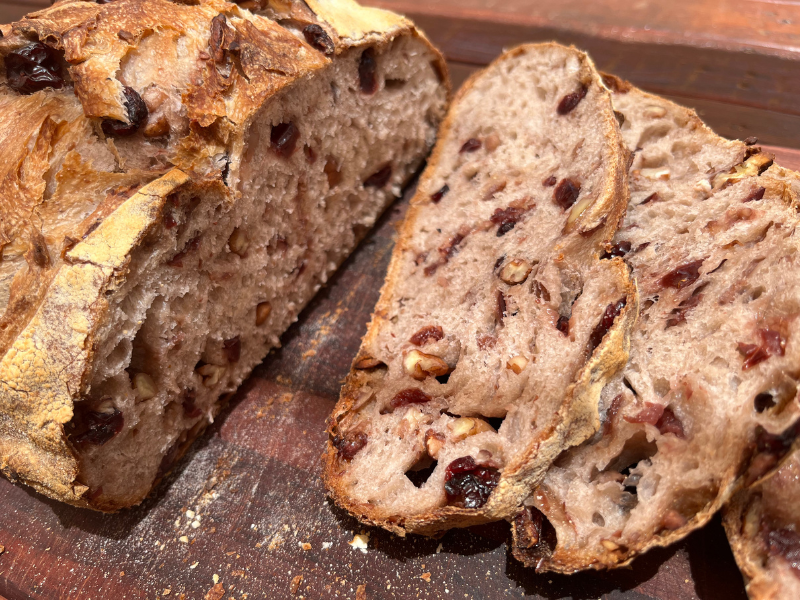
Sourdough bread is beloved for its tangy flavor and chewy texture, but adding cranberries and pecans takes it to a whole new level. This delightful bread is perfect for the holiday season or any time you want to enjoy a flavor twist to your standard sourdough. The tartness of the cranberries perfectly complements the rich, buttery taste of the pecans, making this loaf a wonderful addition to your bread repertoire. Try this Cranberry and Pecan Sourdough Bread recipe and let me know what you think!
What is the secret to good sourdough bread?
Over night cold fermentation
This will intensify the flavour of your bread, and give you the benefit of lowering the overall gluten in the dough. Make sure your fridge is set to 4°C or less as this can really cause you a lot of disappointment when you did everything perfectly but your dough just kept rising in the fridge because it was to warm.
10 Tips when working with sourdough
- Start with your favourite yeast bread recipe and just substitute the yeast for about a cup of starter, follow your normal mixing and kneading routine, then put the dough in the fridge. Next day, shape, let rise for 4 hours and bake.
- Keep using one recipe until you have mastered it with consistent results, do not jump around with different recipes too soon as this could confuse you and cause you to loose heart.
- Wet your hands when you work with high hydration dough, you will stick less.
- Get yourself 1 steel and 1 plastic dough scraper to work with the dough on your counter.
- Watch the dough, not the clock.
- When you feel like your dough just doesn’t want to come together and everything is a mess, butter a bread pan, dump the dough in there and let it rise almost to the top. Butter an oven pan and place it on top of the bread pan and bake.
- Do not over complicate things.
- Practice, practice, practice.
- Write down your recipes, adjustments, times, temperatures and findings. You will improve a lot quicker this way.
- Enjoy the process!
3 Ways to add inclusions
1 – With all the ingredients when mixing
This method is controversial because it can cause the dough to tear and be more difficult to develop the gluten. In my experience it somewhat depends what inclusions you use, if it is something sharp, it can tear the dough and you might sacrifice some volume, but it will still taste delicious.
2 – With the 3rd stretch and fold
This is the most common way to add inclusions as you have the least risk to damage any gluten or bubbles that is starting to form.
3 – Laminating while shaping
Forgot to add your inclusions and you are done with all your stretch and folds? Do not fear, there is one more way. When you are ready to pre shape your dough, wet your hands and counter top very well. Stretch dough VERY gently and evenly as large as you possibly can. Add halve of the inclusions. Fold right side 1/3 on to middle, add some more inclusions on the dough, fold left side on top and add last inclusions. Now roll the dough from top to bottom or bottom to top into a tight log. You can see this as final shaping or wait about 15minutes and do another shaping. Just be very gentle.
This method can damage some of the beautiful bubbles that started to form, so this is not my favourite method, but definitely do-able. You might end up with a tighter crumb structure, but still soft and delicious.
Ingredients
- For the sourdough starter:
- 100g active sourdough starter
- 100g all-purpose flour
- 100g water (room temperature)
- For the bread:
- 500g white bread flour
- 350g water (room temperature)
- 50-100g sourdough starter
- 10g sea salt
- 100g dried cranberries
- 100g pecans (chopped)
Tools Needed
- Mixing bowl
- Wooden spoon or dough whisk
- Proofing basket or bowl
- Dutch oven or baking stone
- Parchment paper
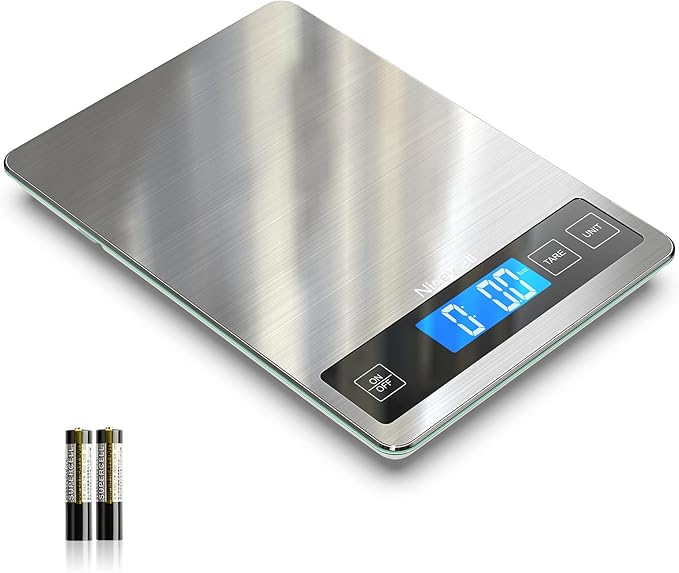
- Kitchen scale (for accuracy)
Instructions
1. The night before
Feed 100g of your starter with 100g water and 100g flour. This will leave you with a little extra if you choose to make two loaves or use the starter for something else. Never through away starter. If you would like to know what to do with a surplus starter, watch this space for a post on that soon.
You would also want to rough chop and soak the nuts and cranberries in water. This is optional but I have found that this helps to preserve the gluten structure a little better and by having whole nuts in the bread makes it difficult to cut.
If you forgot to soak your nuts over night, don’t worry, just soak it in hot water for 1 hour.
2. Next day: Mix the Dough
- Drain your nuts and cranberries. Keep the water!
- Put the water from the nuts and cranberries in a mixing bowl and add until you have the right amount of water for your mix.
- Add your starter, flour and salt.
- Roughly mix, cover and let rest for at least 20 minutes so the flour can absorb the water fully.
3. Stretch and folds
- Stretch and fold all around the bowl until the dough starts to resist. Let rest for 15 minutes.
- Stretch and fold again all around the bowl until the dough starts to resist. Let rest for 15 minutes.
Add Cranberries and Pecans
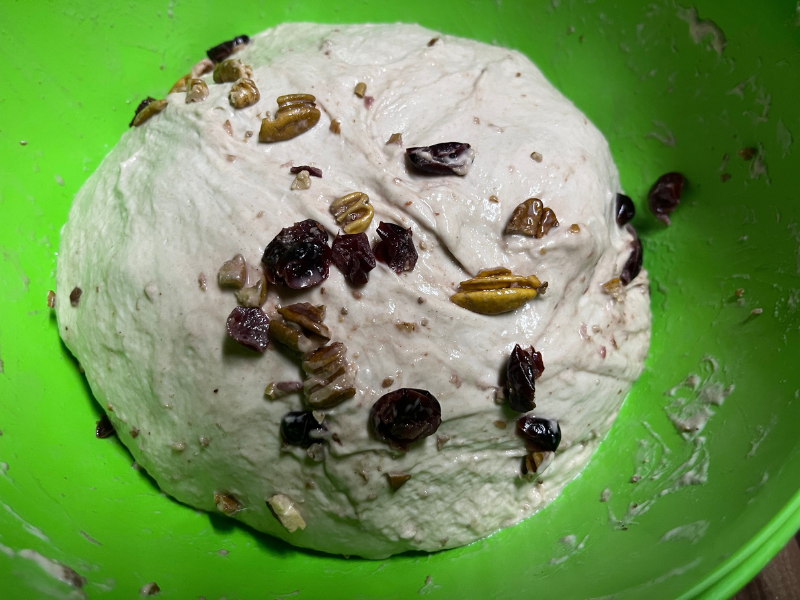
- Add nuts and cranberries on top of the dough and push it gently into the dough with your fingers.
- Stretch and fold again all around the bowl and then turn the dough upside down. Let rest for 30 minutes.
- Do coil fold until the dough stays in a tight ball. Let rest 30 minutes.
- Do the last coil fold.
4. Bulk Fermentation
Let rest and let it rise visibly, about 30%. This will vary seasonally and depending on how much starter you are using. I like to use more starter in winter and less starter in summer. You will have to consider your ambient temperature as this can drastically effect your dough rise time. This following table is my personal experience:
Sourdough rise time with different variables:
| BAKERS PERCENTAGE | ROOM TEMPERATURE | TIME TO RISE 30-50% | |
| 100% FED STARTER | 20% | 16°C | 6 hours |
| 100% FED STARTER | 20% | 28°C | 3 hours (difficult to stop) |
| 100% FED STARTER | 10% | 16°C | 9 hours |
| 100% FED STARTER | 10% | 28°C | 4 hours |
5. Pre-shape and Bench Rest
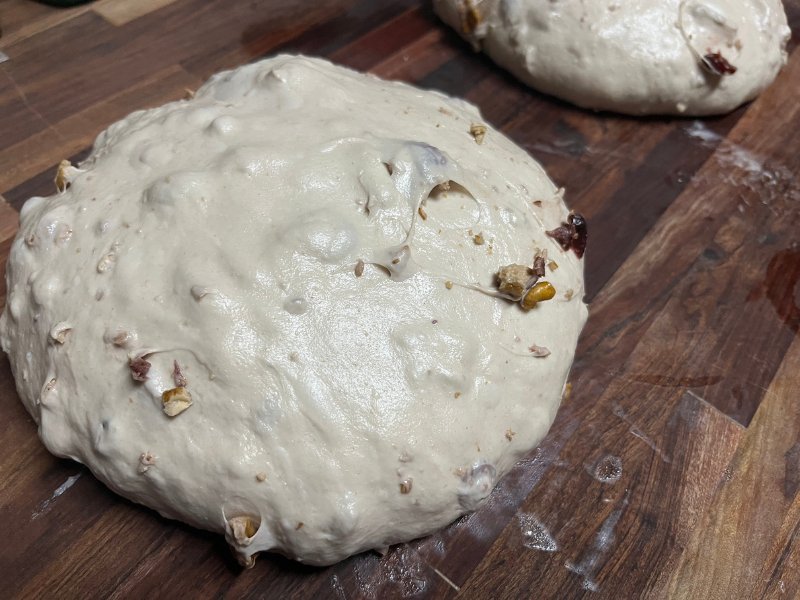
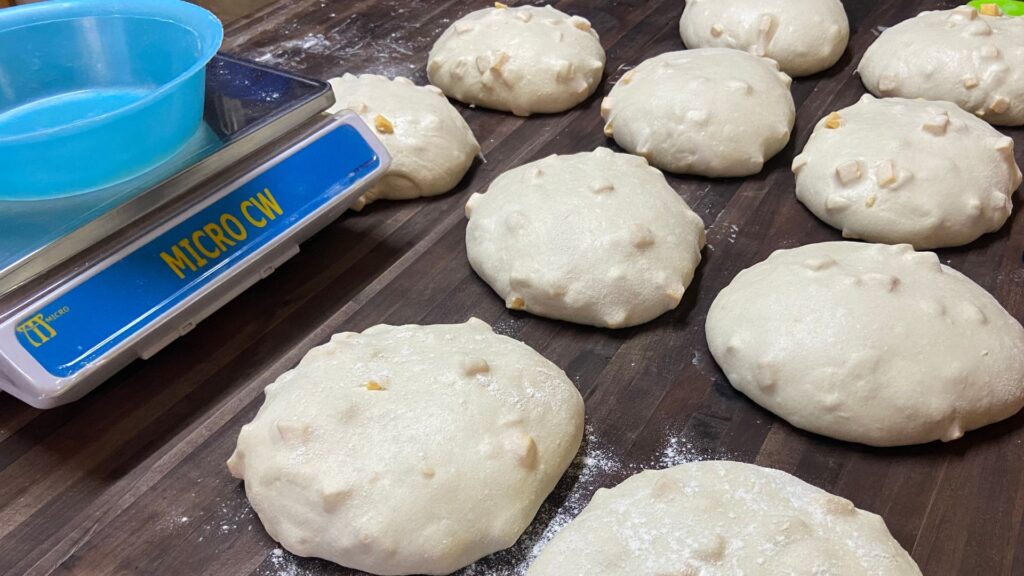
Turn the dough out onto a lightly floured surface and shape it into a round. Let it rest for 30 minutes, covered with a damp cloth.
6. Final Shape
After the bench rest, shape the dough into your desired shape (round or oval) and place it into a proofing basket lined with a floured cloth.
7. Final Proof
Cover the dough and let it proof for another 2-3 hours at room temperature, or for a stronger flavor, place it in the refrigerator for an overnight cold proof at at least 4°C.
8. Preheat the Oven
About 30 minutes before baking, preheat your oven to 450°F (230°C) with a Dutch oven inside.
9. Bake the Bread
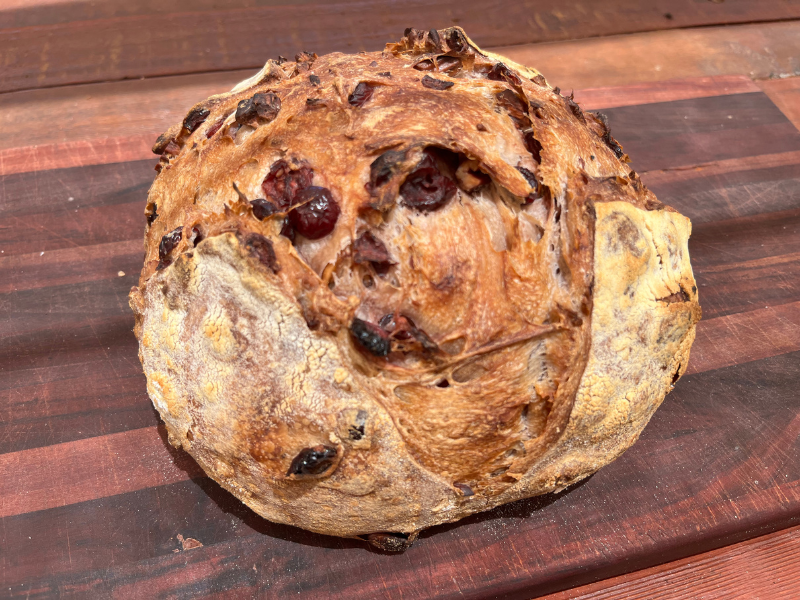
Once preheated, carefully remove the Dutch oven. Gently flip the dough out onto a piece of parchment paper and place it in the hot Dutch oven. Cover with the lid and bake for 30 minutes. Remove the lid and bake for an additional 15-20 minutes until the bread is deep golden brown.
10. Cool and Enjoy
Let the bread cool on a wire rack for at least an hour before slicing. Enjoy your delicious cranberry and pecan sourdough bread with butter, cheese, or your favorite spread!
Conclusion
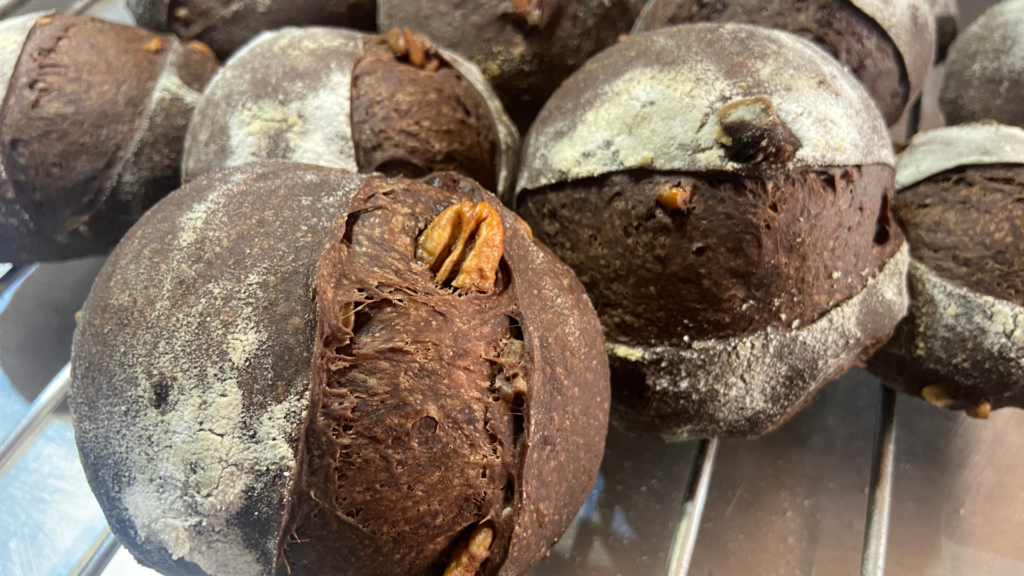
This Cranberry and Pecan Sourdough Bread is not only a feast for the taste buds but also a stunning centerpiece for your table. Whether served fresh or toasted, this bread is sure to impress your family and friends. Happy baking!
My Sourdough must have’s!
Cast iron dutch oven

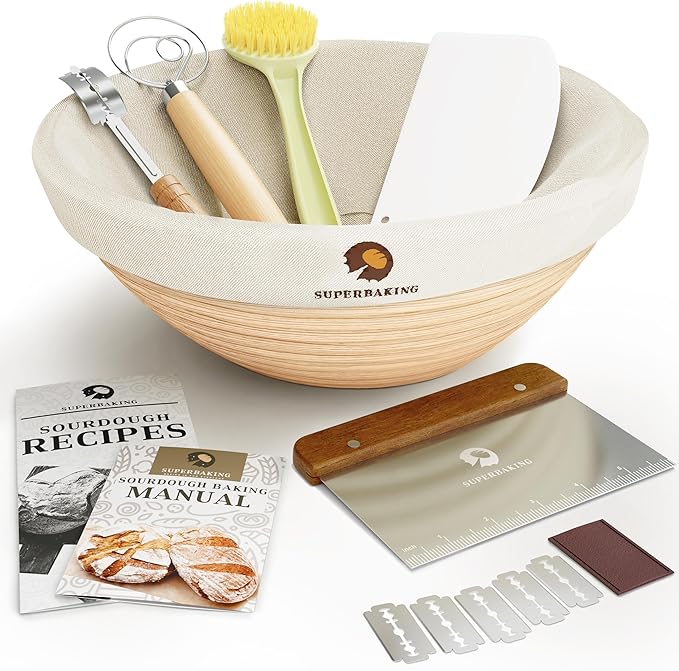
Sourdough kit
Kitchen scale
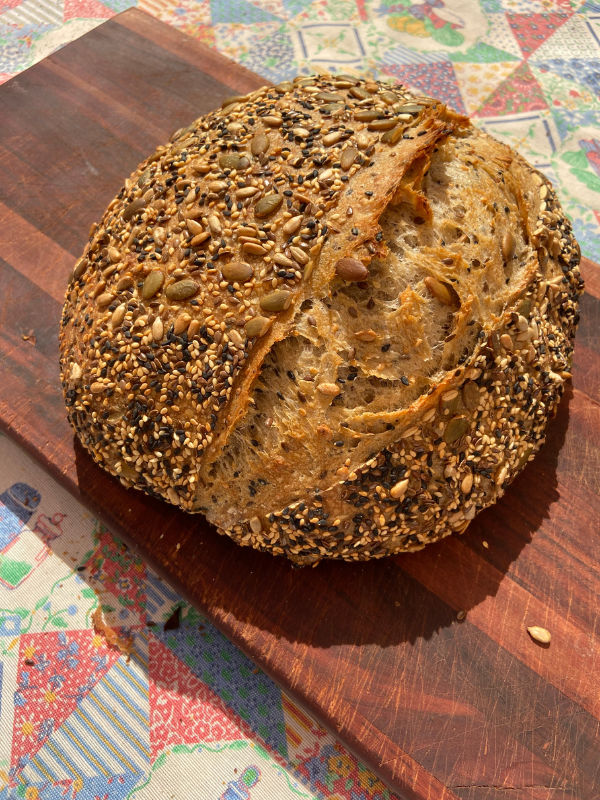
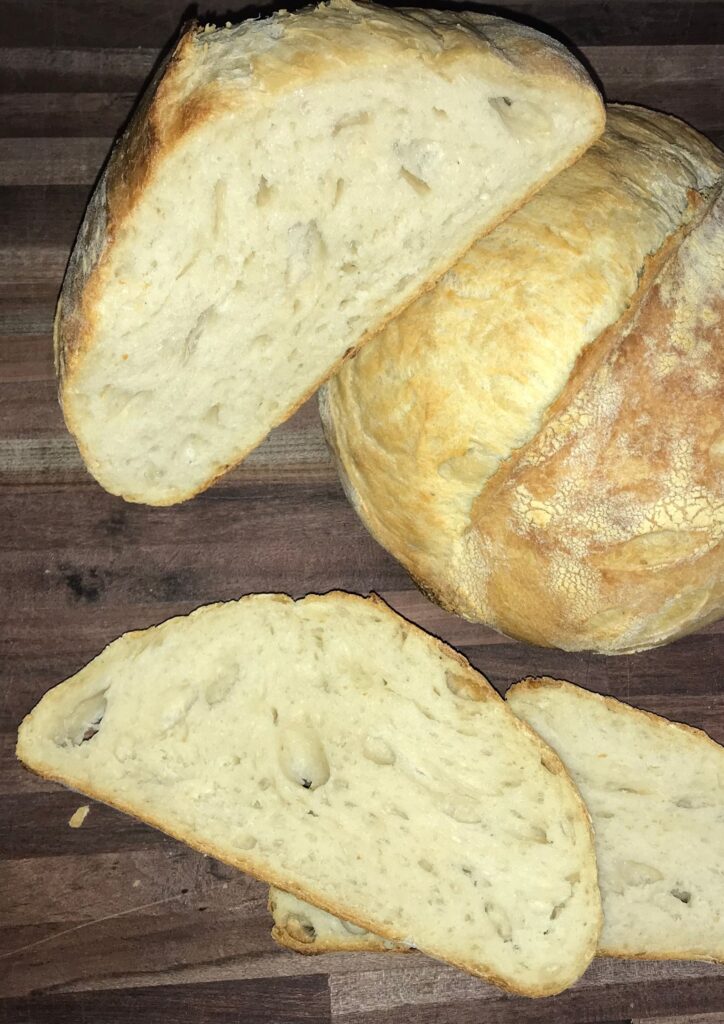
Other delicious sourdough recipes to try!
One Response